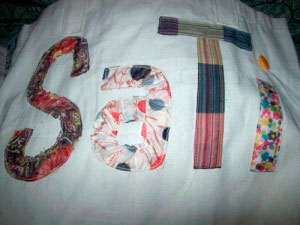
Beginning today (Sept. 1), plastic bags are no longer allowed in all Quezon City department stores, supermarkets and grocery shops. This means that business establishments will no longer use plastic bags in all their transactions. Quezon City residents will have to make do with non-plastic bags to shop. Bring your own eco bag or environment friendly or reusable bags whenever you leave your house. Good thing I have cloth bags here that I can use anywhere, including my stylish Sati bag. 🙂
It’s a clever yet interesting concept to see the fusion of old and contemporary art pieces at the Lopez Museum. The art pieces that showcase confrontation and conflict are given a fresh perspective by two young artists known for their individual styles and passion towards art.
I haven’t been to a lot of art exhibit in recent years where the artist himself or herself shares a little story about his or her work of art.
Artists Nikki Luna and Ernest Concepcion, and even artist director Claro Ramirez, Jr., spare a few minutes of their time to share what contemporary arts are all about, how they shape, affect or influence the society.
Such an unforgettable afternoon I had with these amazing artists, especially with Nikki Luna, a human rights advocate. Her arts and her dedication to help the displaced women and children in conflict-stricken areas in Northern Mindanao are truly inspirational.
All her four artworks at the Lopez Museum signify land.
“Land is a major part of the show because a lot of our lands are contested and disputed either because of mining or the feudal system,” Luna explains.
Luna’s artworks articulate for the ones that cannot actually have a voice when it comes to owning and claiming land.
Precious and Fertile. The white pieces signify picket fence (made of china bone). Beneath the fence is the land being “contested”. At the back of the fence is a running video taken from Hacienda Luisita.
Azucacera. The glass box contains 7 pieces of brown and 7 pieces white sugar diamonds.
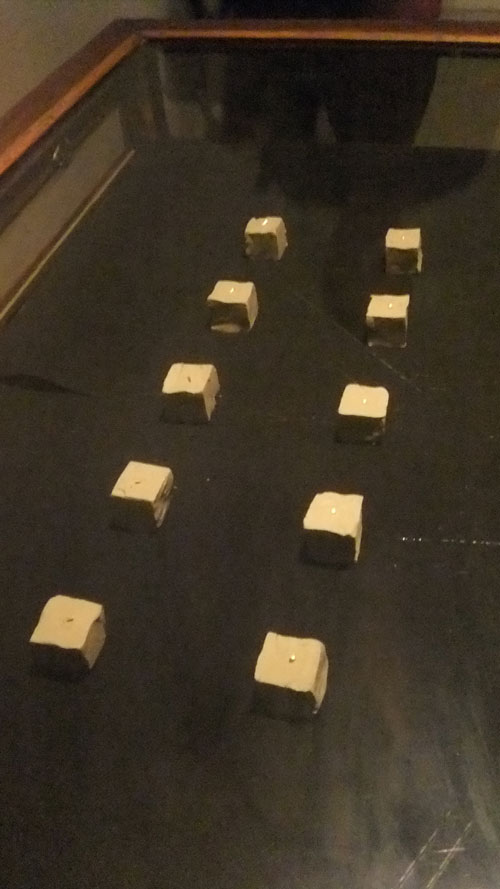
Embellished Earth. The glass case contains clay, rice and munggo in 14k gold and each was placed on top of a small jewelry box. So, like the sugar (diamonds), rice and mongo is valuable to landlords or farmers.
Luna said the mongo seeds came from Mindanao and it’s what they plant there. They don’t sell it, but it’s what they live by. The rice or palay, on the other hand, came from Hacienda Luisita. People in Hacienda Luisita get to sell the palay and get to eat it, too.
Lupa: Kibawe-Bukidnon, Maramag-Bukidnon, Opol-Misamis Oriental, San Fernando-Bukidnon, Ramain-Lanao Sur, Dalwangan-Malaybalay, Balingasag, Misamis Oriental – One cup of soil per display case. The seven soils represent seven places in Mindanao that have been militarized due to mining.
When asked how effective is art in supporting social causes, Luna said it is effective as it stirs people’s interest to react on certain issues.
“People come in here, you make them look, automatically they will reflect on it whether good or bad, whether they want to help or not, whether it’s interesting, they will ask a question, like ‘ano ‘yan, ano ‘to? And then they will find out the information, the story, and then later on you’re left with that thought, ‘where do you stand?’ ‘May paki ka?‘ or ‘tiningnan mo lang ‘to sa gallery and that’s it, wala ka ng paki pagkatapos?O may iba pa na pwedeng mabago. So, I believe art can do that if we can all…I particularly mean, I really like art that can say a lot about our times because our art can actually shape our society,” Luna explains.
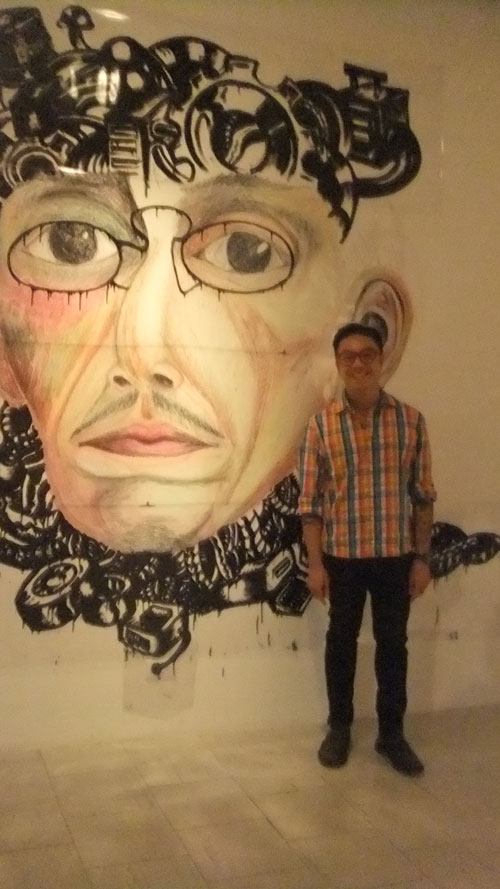
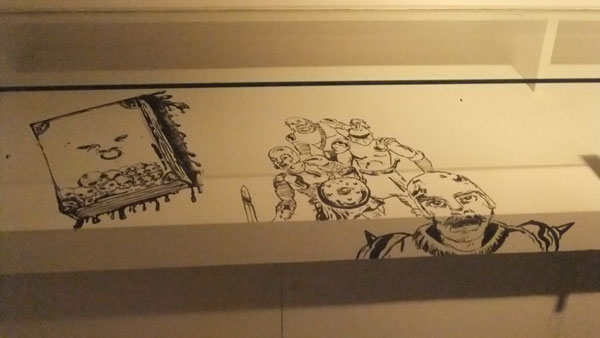
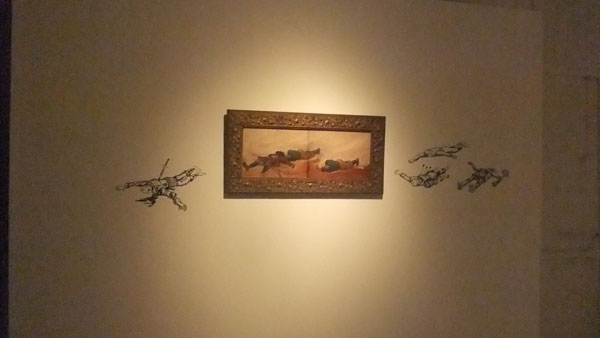
Meantime, if you love the kind of art that would seem to take you to a different dimension, visit Ernest Concepcion’s work at the Lopez Museum as he tries to recreate painter (Felix Resurreccion) Hidalgo as the super multi-dimensional time bandit, in his mixed media works.
Hidalgo’s face which was drawn on an acetate paper is just the start of the (drawing/painting) epic, according to Concepcion. The Hidalgo face is the idea of the museum. He just takes cue from what is being exhibited, which are mostly Hidalgo paintings.
Concepcion lets Hidalgo popped up as a character that he can be seen somewhere from the landscape paintings then becomes a robot in another painting/drawing.
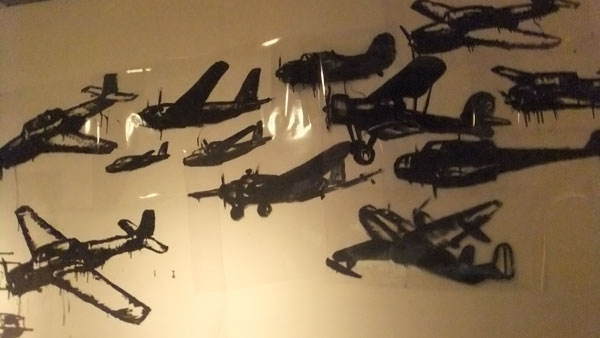
Most of his paintings actually tell stories or myths that he made up on his own – a good part of it originated from what he loves to do as a child. Just like his collective drawings of World War II -inspired airplanes, they are child-like aspect of putting up the photographs together.
Concepcion, who comes from a family of doctors, said he wants people to enjoy his works of art like reading comics only that they have to go around the museum to get the story in a multi-dimensional way.
The Lopez Memorial Museum is being reinvented by using new media particularly installation conceptual art from artist such as Luna and Concepcion. They want to reinvent spaces and pieces not just to become object, but the work of art becomes the museum as a whole because of the execution as a collective work.
“Ang kagandahan sa new media like the installations, you have to experience, you brought in to a point of trying to be there, take something from it, from your point of view,” said Ramirez.
Learn more about Luna and Concepcion’s works currently on display at the Lopez Museum which will run until October 2012.
From the exhibit and the discussions with the artists, I’ve had better understanding of art as an effective tool to tell story about our past, present and future; that art brings out the child in us – carefree and unaffected; that art helps heal, an outlet to talk about things that we fear; that art can somehow effect change without resorting to desperate means; that the meaning and the content of art work is more important than the art itself; that art can make a person a better citizen.
From their respective websites:
Nikki Luna took her Bachelor of Fine Arts major in Painting, in the University of the Philippines. In 2008, she was accepted in the Cooper Union Summer Residency in New York. Luna finds history in the most unlikely places—such as memory and sentiments—and then narrates these wordlessly, through nuanced installations and paintings. www.nikkiluna.com
Ernest Concepcion was born in Manila, Philippines where he received his BFA then moved to the US in 2002. It was in the lonely town of Englewood, New Jersey where he began The Line Wars, a series of black and white drawings depicting opposing forces engaged in ridiculous battle based on the entertainments of childhood and adolescence. www.ernestconcepcion.com
Of saving the environment and giving equal opportunities to local residents of Las Piñas via Green Social Enterprises
Meeting environment conservation advocates and organizations that deal with ecological waste management is not new to me. I met a number of them in the past when I was still part of a daily publication. So, when I received an invitation for a tour at the green social enterprises in Las Piñas and learned that we will be meeting its prime mover, I thought it would be a great opportunity to meet another good hearted person who promotes environment preservation and livelihood to local residents of Las Piñas.
Before we met with Mrs. Cynthia Villar, the Managing Director of the Villar Foundation, which incidentally is celebrating their 20th anniversary this year, I and about 20 bloggers initially toured different barangays to see for ourselves the foundation’s ongoing livelihood programs in the area.
Engineer Dexter Gonzales, of the Villar Foundation, introduced us to selected social enterprises of the foundation: twining and weaving nets from coconut husks, handloom weaving, house waste composting, vermin composting, producing hollow blocks from trash, and crafting baskets from water hyacinths.
The development of these livelihood projects was an offshoot of an endeavor to clean and revive the Las Pinas-Zapote River.
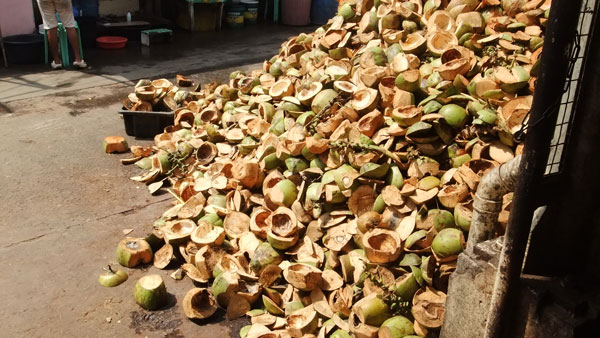
The husks not thrown on the river were left on the sidewalks and the city had to spend more to haul the garbage.
Trash collectors failed to collect sacks of coconut husk so they end up polluting the r iver, Engr. Dexter Gonzales told bloggers.
To address the growing problem with coconut husks that were left on the sidewalks, Mrs. Cynthia Villar initiated and met with experts from Bicol University for the Coco Coir technology.
Dr. Justino Arboleda, an agricultural engineer, designed the machinery to make the coco-net. Coco Coir Enterprise utilizes coconut husk and convert them into coco net.
Coconut halves are collected and sun-dried
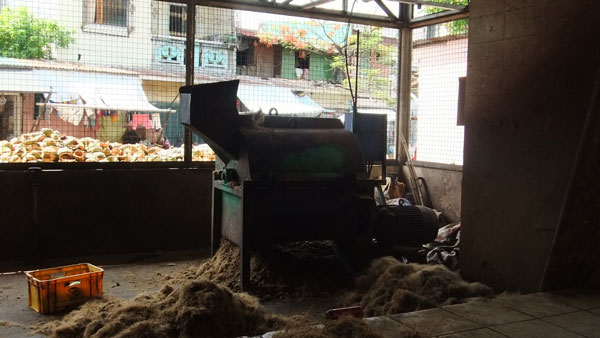
Husks are placed inside decorticating machine.
Separates fiber for twining
Mom and daughter team help in twining the coconut fiber to create ropes
Each string measuring 11 meters cost P1.50. Each beneficiary family can earn P3,200 per week. More than 100 families benefit from the coco net production.
Twines are weaved in the loom to create nets.
You will notice that twines are not refined. But Engr. Gonzales said they could have bought machines to refine the rope if only they are after business.
Finished coco nets are used for slope protection and control soil erosion.
Fiber can also be used as mattress filler and briquette holder for plants. Coco nets are being used by Las Piñas City and private developers.
The foundation also produces these fine blankets as part of relief goods during natural disasters.
The handloom weaving which began seven years ago is helping at least 20 families. There are 17 machines found in 5 barangays that produces 800 blankets a month. Each worker earns P65 per finished blanket.
Earnings from coco coir enterprise are used to subsidize the salary of workers and materials used in the weaving center.
In a bid to reduce the volume of household waste the foundation teaches LP residents the value of house waste composting. Kitchen wastes are leftover food and fruit and vegetable peelings.
“If they know how to separate dry to wet waste, nothing will reek,†thus said Barangay Captain Roberto Villalon, of Barangay Elias Aldana.
A ‘bio-man’ collects segregated kitchen waste everyday.
Excess liquids are removed from the kitchen waste before they are transferred to the mixing plate. The coco dust or peat from the coco coir enterprise is mixed to the compressed garbage.
The refined mixture is poured to the composting machine (rotary composter) for processing.
The compost is air-dry before they are packed in desired pack sizes.
A total of 47 rotary composters are found in 20 barangays. Each rotary composter produces 1,000 kilos of organic fertilizer. At least 141 families benefit from the 10-year-old project.
Creepy crawlers irk me, but this one called African Night Crawlers (earthworms) could be an exception because they help plants grow healthy. (But still you can’t make me touch them).
They thrive from collected garden waste such as leaves, twigs, and plant trimmings.
Garden wastes are shredded and transferred into vermi-composting bed. After one week, the vermin compost is ready for harvest and packaging. Vermi compost is sold to organic farms for P30.00 per kilo. Eleven families benefit from this enterprise. Eleven vermicomposting centers are found in 11 barangays with a total of 5,500 kg monthly production.
Use of plastic sando bags is definitely a no-no in Las Piñas public markets, but the foundation can make something good out of plastics! They use them in the production of hollow blocks.
Workers collect shredded plastic materials (10 kilos) and mixed them with 10 sacks of sand and 1 bag of cement to come up with 75 hollow blocks or 150 paver blocks. Finished products are ready for construction use.
Brgy. Captain Villalon said hollow blocks are being used for barangay projects and not for commercial use.
Thirteen barangays benefit from the shredding and pulverizing machine and provides income to 27 families.
To instill the importance recycling and segregating to the people of Las Piñas, a monthly Barangay Recycling Day was initiated by Congressman Mark Villar in 2010. Junk yard owners and operators buy recyclables — newspapers and magazines, plastic bottles and empty cans from homeowners.
Liquid waste is converted into cooking gas.
This is one of the interesting parts of the tour as we were presented with different sizes of baskets and containers made from water hyacinths at the Las Piñas Arts and Crafts Center.
The women of Las Piñas weaved the dry water hyacinths stalks to create this beautiful work of art. Water hyacinth was once tagged as aquatic pests as it clogs the river and serves as breeding ground for dengue mosquitoes, but for the men and women of Las Piñas, water hyacinth is a source of income. Las Piñas has four weaving centers to date.
Our last stop was at the Villar Residence where we are treated to a sumptuous lunch by their friendly staff. Mrs. Villar came in to join us. She is warm and accommodating. She eagerly entertains questions thrown her way.
She shared how successful their livelihood programs are and expresses her willingness to help the neighboring places.
Mrs. Villar is no longer in public service (she served as congresswoman of Las Piñas) but she maintains the projects of the foundation that will help the environment and create job opportunities for the residents of Las Piñas particularly the poor ones.
I believed that the foundation is doing well in its effort to let people understand the proper way of disposing waste and the rewarding part of it is to let them know that they can make money out of segregated and recycled waste materials.