Category Archives: Advocacy

International Women’s Day 2021

Happy International Women’s Day!

Cheers to the working women; mommies at home, mommy blogger friends, mommies in the corporate world; and single ladies (including my young adult daughter) out there!
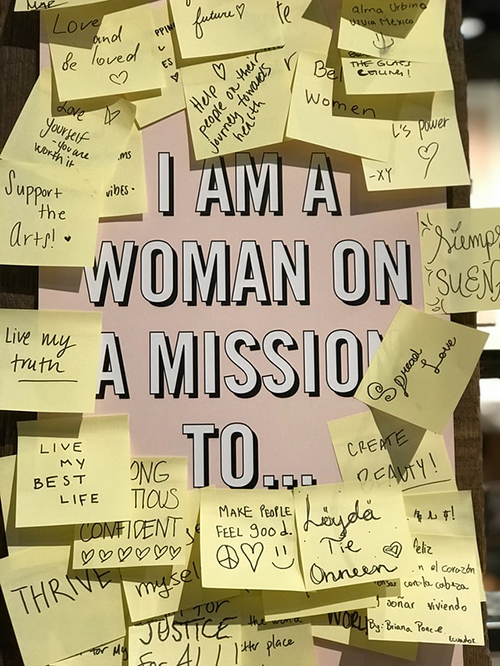
Photo by Valentina Conde on Unsplash

I don’t have many pictures to share to commemorate the occasion. I’m happy to share a few that I was able to save from my computer. I actually retrieved them from my blog’s FB page.

These pictures were taken during the Villar Foundation-Green Enterprises Tour in Las Piñas in 2012. It’s one of the coverages I’ve done as a blogger.

Kudos to these women for thriving. Despite the difficulty of their jobs, they are proud to earn for their loved ones.
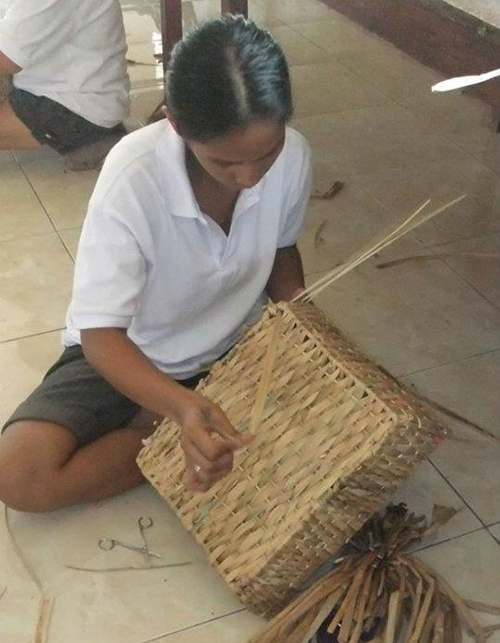
Basket weaving. She weaved the dry water hyacinths stalks to create this basket.

Water hyacinth was once tagged as aquatic pests as it clogs the river and serves as the breeding ground for dengue mosquitoes, but for the men and women of Las Piñas, water hyacinth is a source of income. Las Piñas has four weaving centers to date.
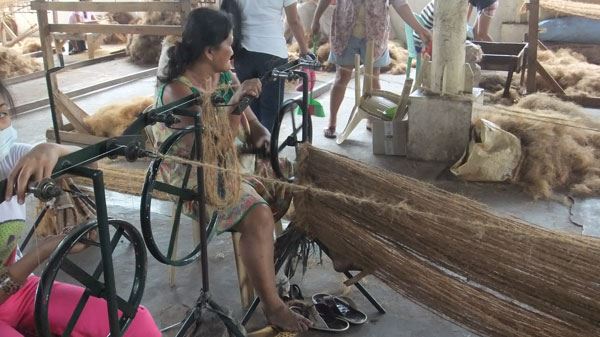
Twining coconut fiber. Finished coco nets are used for slope protection and control soil erosion.

Fiber can also be used as mattress filler and briquette holder for plants. Coco nets are being used by Las Piñas City and private developers.
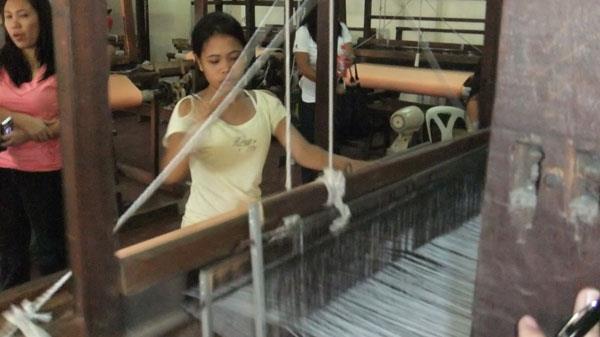
Handloom weaving. Fine blankets are distributed as part of relief goods during natural disasters.

The handloom weaving began several years ago in Las Piñas is helping at least 20 families. There are 17 machines found in 5 barangays that produce 800 blankets a month. Each worker earns P65 per finished blanket. (I haven’t had an update on this yet. I hope the program still employs more women.)

These women believed in the virtue of diligence and hard work. They were happy to share that anyone can earn a decent living from segregated and recycled waste materials.

Some unforgettable stories I posted in my other blog, www.penname30.com

Meanwhile, this is me, when I was working as a reporter for People’s Tonight. I was interviewing a young girl for my story. I had good memories of doing my job to the best of my abilities. Happy International Women’s Day to all!

(This post originally appeared on http://www.momwritesforacause.com/international-womens-day-photos/)

Bioengineering

I’m glad to have stumbled upon this photo posted by DPWH Secretary Mark Villar on his Facebook page in July. The photo showed a segment of Tarlac Pangasinan La Union Expressway (TPLEX).

According to Sec. Villar, coco net, and vetiver grass are being utilized in the 11-km segment of TPLEX to prevent soil erosion. The photo also carries hashtags #BuildBuildBuild and #Bioengineering.

DPWH Sec. Mark Villar photo

According to Wikipedia, bioengineering means the application of principles of biology and the tools of engineering to create usable, tangible, economically-viable products.

Sun-dried coconut halves

In 2012, we were able to observe how coco nets are developed in Las Piñas. The intricate process includes, drying up coconut halves; decorticating the husks; twining the fibers; finally weaving the net.

The tour at the green social enterprises in Las Piñas was made possible by the Villar Foundation.

Decorticating machine separates coco fibers from coconut husk

Twining and weaving nets from coconut husks are just one of the social enterprises of the foundation. The other livelihood projects include handloom weaving, house waste composting, vermin composting, producing hollow blocks from trash, and crafting baskets from water hyacinths.

Worker separates fiber for twining

The development of these livelihood projects was an offshoot of an endeavor to clean and revive the Las Pinas-Zapote River.

The husks not thrown on the river were left on the sidewalks, and the city had to spend more to haul the garbage. Trash collectors failed to collect sacks of coconut husk, so they end up polluting the river.

Twining the coconut fibers to create ropes

Mrs. (now Senator) Cynthia Villar, managing director of the Villar Foundation, met with experts from the Bicol University for the Coco Coir technology; to address the growing problem with uncollected coconut husks.

Twines are weaved in the loom to create nets

Dr. Justino Arboleda, an agricultural engineer, designed the machinery to make the coco-net. Coco Coir Enterprise utilizes coconut husk and converts them into a coco net.

Finished coco nets are being used for slope protection and control soil erosion. Las Piñas City and private developers use coco nets in various projects.

Congratulations Sec. Villar, for implementing the #bioengineering techniques to assist in the #BuildBuildBuild program of the government. This sure saves a lot of government fundings.

Why You Should Respect the Space of Wild Animals

Wild animals are inherent elements within nature. Truth be told, humans are as much animals as elephants, apes, and zebras, but more civilized and intelligent in some ways. With that said, all animals should be respected. But some humans get caught up in being at the top of the food chain, making them cocky and uncaring of wild animal matters. Unfortunately, this kind of disconnected, backwards thinking leads to species extinctions and habitat losses. So, to save the world with all of the animals in it, here are several reasons why you should respect the space of wild animals.

Image courtesy of assoonas at FreeDigitalPhotos.net

They Were There First

Most animal lineages go back for eons, with evolution leading the way in their development. The same can be said of humans, of course, but the wild animals that remained wild animals were here long before modern humans. So, if you want to base your respect on superiority of a position or premises, animals were there first. You should respect them because this was their home before it was yours. It’s highly unlikely that a wild pack of lemurs would ever wander into your home and set up shop. So, why should you do that to them by building a home in their natural habitat?

Image courtesy of panuruangjan at FreeDigitalPhotos.net

Wild Animals are Stronger, Faster, and More Instinctive

While humans have evolved in what is considered civilization, thousands of species of wild animals have become stronger, faster, and more instinctive. They follow their natures, letting their true selves lead the way in their decisions and thought processes. Wild animals should be respected because they are nature incarnate. They embody everything that humans aren’t, in all of their civilized wisdom.

Image courtesy of Phil_Bird at FreeDigitalPhotos.net

You Could Be Destroying an Entire Ecosystem

When you disrespect animals with littering or slaughtering them or their habitats, you could be destroying an entire ecosystem. It’s the equivalent of pouring molten lead into an ant hill just to see the cool effects. You are, in reality, destroying a smooth-run, well-oiled ecosystem in the name of your own entertainment and fun. It’s wrong. Live and let live. It’s gotten to the point where animal protection officials and preserves have to take out animal life insurance to ensure the continuation of a species after an endangered animal dies.

Image courtesy of assoonas at FreeDigitalPhotos.net

Despite views to the contrary, humans are not the kings of the world. They are merely inhabitants—the same as any other animal. Respect of wild animals should be a given. And an appreciation for nature should be a passed down trait. Teach your kids that wild animals deserve to live and thrive as much as you do, because compassion will go a long way towards a good life.